

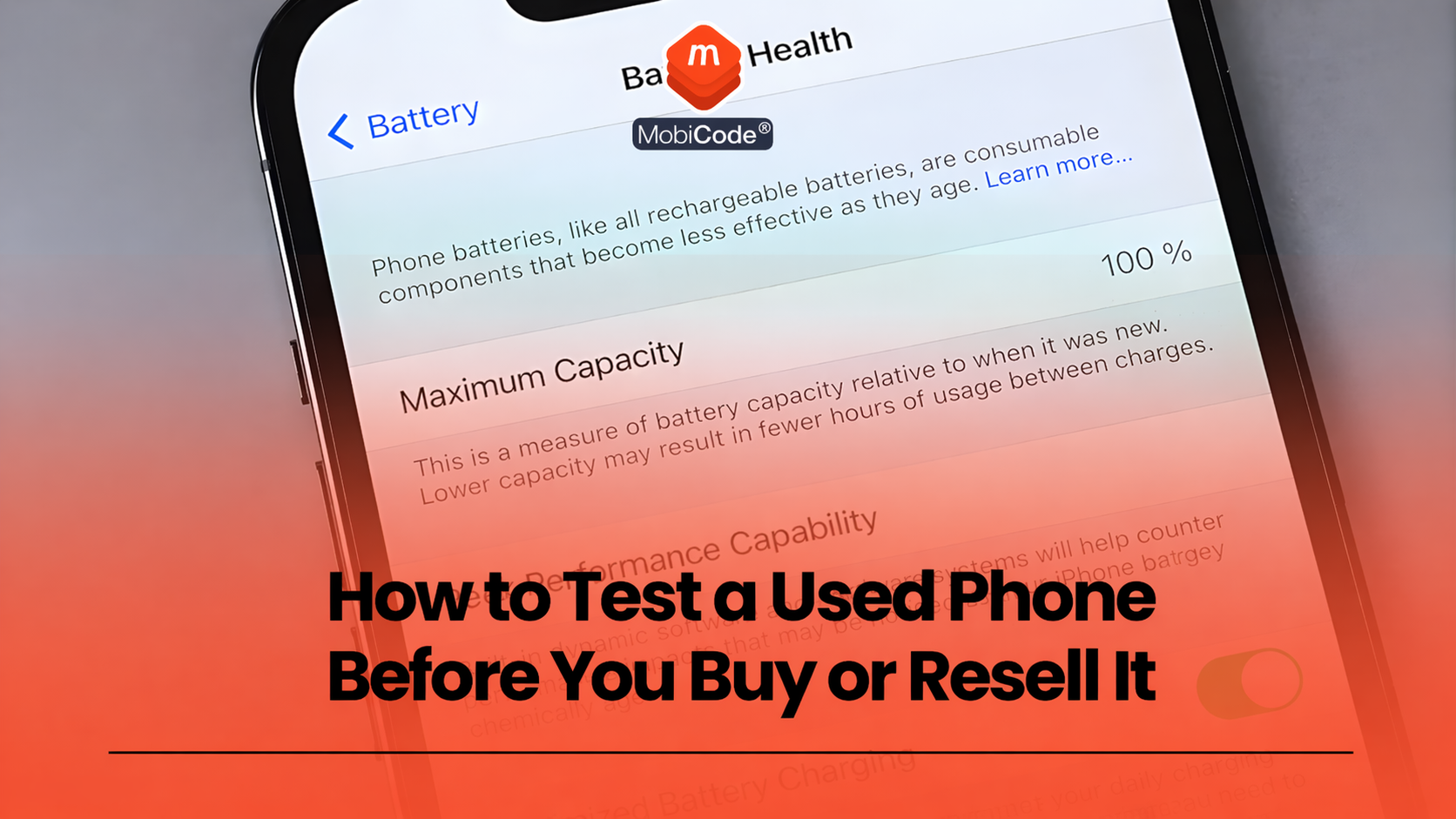
Knowing how to test a used phone properly is one of the most effective ways to reduce fraud, avoid avoidable returns and improve device buying decisions. In real resale and recycling operations, a handset that looks clean externally can still create problems later if key checks are skipped. A screen may look fine and the device may power on, yet important issues with battery health, sensors, lock status or core functionality can still turn a seemingly good purchase into weak stock.
This guide explains how to test a used phone before you buy it, book it in or resell it, using a practical workflow that works for individual buyers, traders, refurbishers and device processing teams. It also shows where MobiCode helps by improving the speed, consistency and quality of the testing data behind those decisions.
In used device markets, a phone test is not just a technical extra. It is part of commercial due diligence. If a device has an issue with key features, battery condition, connectivity, sensors or activation status, the problem is often only discovered after payment, after listing, or after a customer complaint.
The stronger operational point is this: where teams use a fixed phone testing workflow, more weak devices are filtered out early, more pricing decisions are grounded in evidence, and fewer surprises appear later in the process. Pair that with a clean device record, and the gap between “looks okay” and “is commercially safe” becomes much smaller.
Why testing a used phone matters more than most people think
When a device is not tested properly, the cost usually appears later:
- Returns: hidden faults are discovered after delivery
- Pricing mistakes: the handset is valued too highly for its condition
- Support workload: staff spend time handling avoidable complaints
- Margin leakage: cash is tied up in stock that should have been rejected, downgraded or repaired
- Reputation risk: buyers lose confidence if devices arrive with obvious issues
That is why knowing how to test a used phone is not only useful for trade teams. It is relevant to anyone buying or selling second-hand devices.
What a proper used phone test should actually cover
A good used phone test is not just about whether the handset switches on. It should help answer a more useful question: is this device commercially safe to buy, resell or process further?
That usually means checking more than one type of issue:
- Core hardware: screen, buttons, cameras, speakers, microphones and charging
- Battery condition: whether the battery is healthy enough for the intended resale route
- Connectivity and sensors: Wi-Fi, Bluetooth, GPS, NFC and related features
- Status and risk checks: identity, lock or other commercially relevant issues
- Record quality: whether the results are stored clearly against the handset
The aim is not to create unnecessary admin. The aim is to stop weak devices from entering the workflow disguised as good stock.
The biggest mistakes people make when testing a used phone
- Only checking that it powers on: a device can boot and still be commercially weak
- Skipping battery review: battery issues are a major source of buyer dissatisfaction
- Treating testing as informal: different operators reach different conclusions on the same handset
- Relying on memory: results are not stored clearly against the device record
- Confusing cosmetic condition with technical health: a tidy device can still be risky stock
Most of these problems are workflow issues rather than difficult technical problems. The key is consistency.
A practical workflow for testing a used phone before you buy or resell it
1) Start with clean device identification
Before testing functionality, make sure the handset is being identified properly.
- Confirm the model and key device details
- Capture the IMEI or relevant identifiers accurately
- Avoid disconnected screenshots, handwritten notes or guesswork
- Make sure the test result can later be tied back to the exact handset
If the device identity is unclear, the rest of the test process becomes harder to trust.
2) Check the features that create the most resale problems
If you want to know how to test a used phone properly, start with the functions that most often cause returns, disputes or repricing later.
- Screen responsiveness and display quality
- Charging and battery-related indicators
- Cameras, microphones and speakers
- Buttons, vibration and core user controls
- Connectivity functions such as Wi-Fi, Bluetooth, GPS and NFC where relevant
This is where a structured process is far stronger than an operator “having a quick look”.
3) Pair technical testing with status and risk checks
A phone can pass a basic functional test and still be commercially problematic. That is why testing should sit alongside wider due diligence.
- Check the device before it is listed or allocated to sale stock
- Review relevant lock or status issues where needed
- Keep the testing and checking outcomes together in one record
This prevents teams from approving a device on technical condition while missing another risk entirely.
4) Record the outcome clearly, not loosely
Testing is useful. Evidence of testing is what makes the result operationally valuable.
- Store the outcome against the handset record
- Make sure another operator could understand what passed, failed or needs review
- Avoid vague notes such as “seems fine” or “works okay”
Clear records improve pricing, handover, dispute handling and consistency across the team.

5) Treat any failed or unclear result as a commercial decision point
Not every issue means the device is worthless. But every issue should affect what happens next.
- Decide whether the handset should be rejected, downgraded, repaired or held for review
- Do not allow uncertain results to pass into listings as if nothing happened
- Use the result to guide pricing and resale route decisions
A surprising amount of margin leakage comes from teams discovering faults, then behaving as if the fault has no operational consequence.
How MobiCode helps teams test used phones more consistently
For used phone testing, MobiCode matters upstream. The value is not just in running tests. It is in making test outcomes more reliable, more repeatable and more commercially useful.
- Testing workflows: improve consistency and reduce missed issues during intake and grading.
See: MobiCode TEST - Checks and due diligence: support stronger decisions when technical testing is paired with status checks.
See: MobiCode CHECK - Connected device records: keep test outcomes tied to the handset rather than buried in loose admin.
See: MobiONE - Downstream processing support: help teams handle passed devices more confidently as they move into resale, reuse or recycling.
See: MobiWIPE
That is what makes testing more valuable. A quick check may identify some faults. A structured workflow helps the business act on the result properly.
Why this matters for buyers as well as trade teams
The question of how to test a used phone is not only relevant to larger refurbishers. It matters to:
- people buying second-hand phones privately
- small resellers and marketplace sellers
- repair centres assessing incoming handsets
- trade buyers reviewing stock quality
- recycling and reuse teams sorting mixed-grade devices
In each case, the same principle applies: the less evidence behind the decision, the higher the chance of an avoidable mistake.
What a good used-phone testing process looks like in practice
A strong testing process is not over-engineered. It usually includes:
- a clear identity capture step
- a consistent functional testing routine
- a record of what passed, failed or needs review
- a rule for how the result affects grading, pricing or release
- a link between technical findings and commercial decisions
The goal is not to slow the workflow down. The goal is to stop weak stock moving through the system disguised as speed or convenience.
Commercial takeaway: how to test a used phone
Testing a used phone should be treated as a standard risk-control and value-protection step, not an optional extra. A proper workflow reduces returns, improves pricing decisions and gives buyers and trade teams more confidence in the handsets they approve. MobiCode helps by improving the consistency, traceability and commercial value of the testing process behind those decisions.
A practical example that prevents a weak device entering resale stock
A buyer is offered a handset that looks clean, powers on and appears attractive at the asking price. Without a structured test, it is easy to approve the device on the basis of appearance and speed. The problem only surfaces later, once the handset has already been bought, booked in and prepared for sale, when a battery issue or failed feature creates a return.
A stronger workflow is much simpler: identify the device properly, run the relevant tests before approval, record the outcome clearly, and decide whether the handset should pass, be downgraded, be repaired or be rejected. That one change does more to protect margin than relying on intuition or rushed operator judgement.
FAQ: how to test a used phone
Is it enough just to check whether the phone turns on?
No. A device can power on and still have battery, sensor, lock or functionality issues that affect resale value and buyer satisfaction.
When should a used phone be tested?
Before purchase, intake approval, grading or listing. The earlier the test is done, the easier it is to avoid weak stock entering the workflow.
Why should test results be stored against the handset record?
Because a result is far more useful when another operator can review it later for pricing, grading, support or dispute handling.