
Latest News

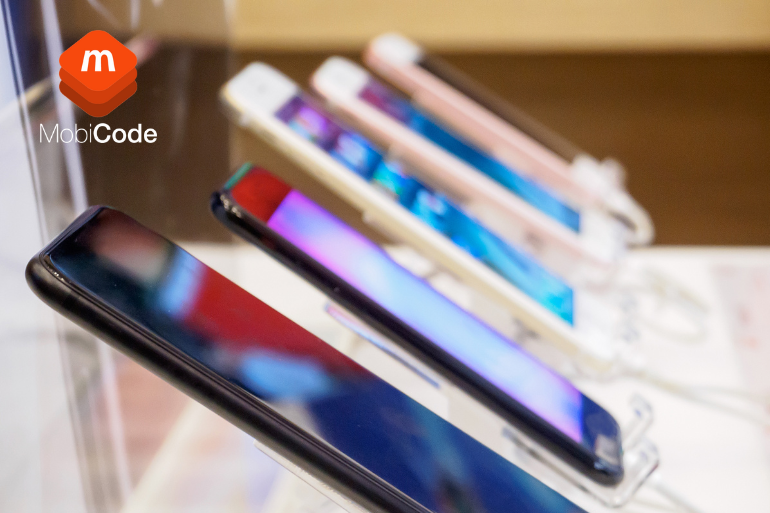
The global smartphone market decline is still a major concern. Sales declined for the fifth consecutive quarter, which made 2018 the worst year for smartphone shipments since smartphones entered the market.
Even Christmas failed to lift the market. A challenging holiday quarter at the end of 2018 pushed global smartphone volumes down by as much as 5.7%.
Looking ahead, the picture did not appear much stronger. The global smartphone market decline had clearly taken hold.
Several factors are likely to be driving lower sales. Smartphone replacement cycles are getting longer. In addition, markets in developed countries are becoming saturated. Political and economic uncertainty also plays a part. At the same time, many consumers are becoming frustrated by the rising cost of new devices.
Apple was among the hardest hit. The company was the first manufacturer to push flagship devices beyond the £1000 mark, and that decision does not seem to have helped sales. Despite launching three new iPhone models in 2018, Apple recorded an 11.5% drop in sales during the fourth quarter.
Apple’s biggest markets are the USA and China, and both saw particularly weak smartphone sales. By contrast, India, Indonesia, Korea and Vietnam showed growth. In those markets, newer Chinese brands such as Huawei were more popular, while Apple struggled to compete.
Apple’s difficulties also looked likely to continue into 2019. 5G was close, but Huawei and Samsung were leading that shift. Without a 5G iPhone in 2019, Apple appeared likely to lose further market share.
There is also a broader lack of innovation across the industry. New devices keep getting more expensive, yet many consumers no longer see a strong reason to upgrade every year. That was easier to justify when smartphones still felt new and rapidly improving.
The next possible shift was expected to come from foldable screens by brands such as Huawei and Samsung. However, it remained unclear whether that would refresh the market and increase sales or simply turn out to be another gimmick.
Some markets still showed promise. India was one example. At the same time, Chinese smartphone brands such as Huawei, Oppo and Xiaomi moved against the wider trend and increased sales during 2018. Huawei in particular built a reputation for producing high-quality phones at mid-range prices. That suggests consumers, especially in developing markets, were becoming more budget-conscious when buying smartphones.
The 10% growth in the refurbished smartphone market during 2018 points in the same direction. Demand for smartphones had not disappeared. Instead, many consumers seemed to be moving away from brand-new devices and choosing professionally refurbished phones to save money.
The key question for 2019 was whether new device manufacturers would continue to lose market share to the refurbished market. If they did, they would need to find a way to reverse that trend.
Copyright © 2024 · All Rights Reserved · MobiCode